Quote vs Invoice vs Receipt: Key Differences Explained
Apr 2, 2026 · 9 min read
A quote, an invoice, and a receipt may contain similar names, prices, and line items, but they serve different moments in a business transaction. A quote helps a customer evaluate proposed work. An invoice requests payment for work or goods. A receipt records that payment has occurred.
Using the wrong document can confuse the customer, weaken your records, or delay approval. The simplest way to choose correctly is to ask what stage the transaction has reached: are you proposing, billing, or confirming payment? This guide follows one transaction through those stages and explains the practical differences without treating any document as a universal legal form.
Quick answer: Send a quote before the customer commits, issue an invoice when payment is due, and provide a receipt after payment. Exact legal effects, mandatory fields, and terminology vary by jurisdiction and industry, so confirm local requirements separately.
Table of contents
- The transaction lifecycle
- What is a quote?
- What is an invoice?
- What is a receipt?
- Quote vs invoice vs receipt comparison
- A practical example
- Common document mistakes
- Frequently asked questions
The transaction lifecycle
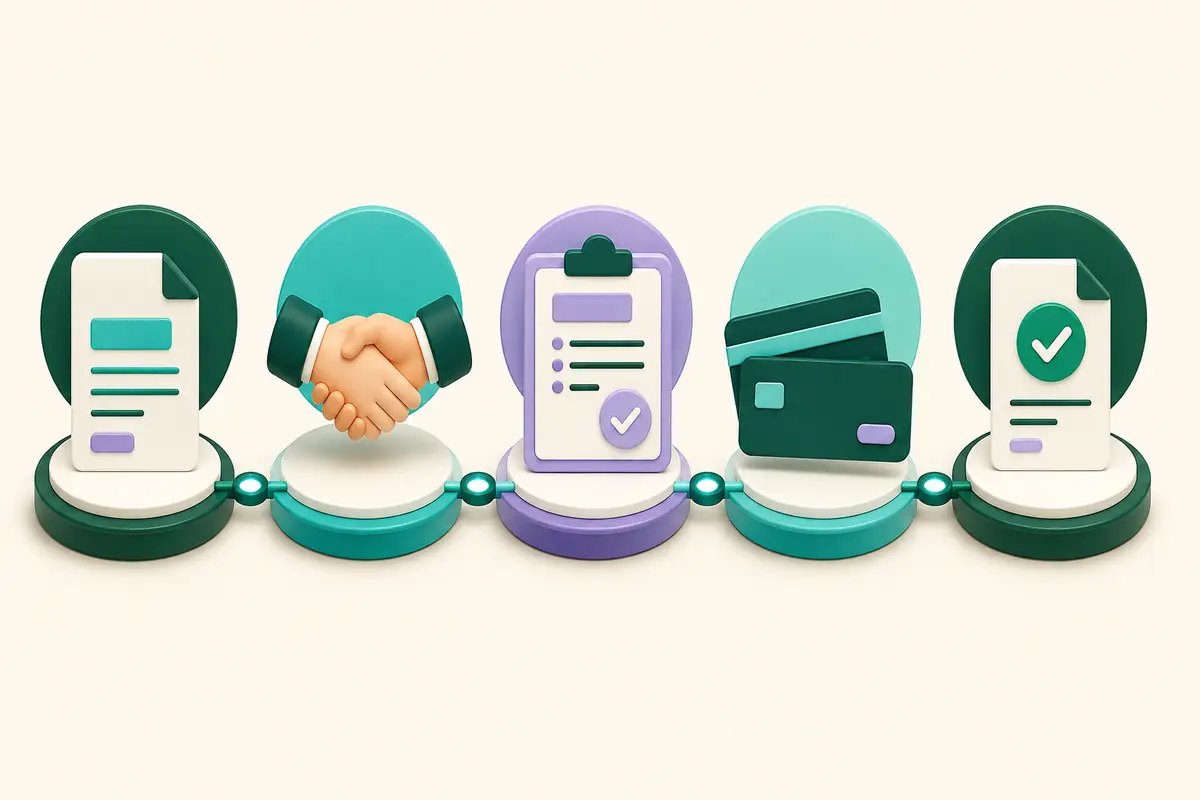
Most straightforward transactions follow a recognizable sequence. A seller describes proposed work or products and supplies a price. The customer approves, rejects, or requests changes. The seller performs the work or supplies the goods according to the agreement. When payment becomes due, the seller issues an invoice. After payment, a receipt may be provided as proof.
Real transactions do not always fit a single pattern. A retailer may issue a receipt immediately without a separate quote or invoice. A contractor may request a deposit invoice before beginning work. A subscription business may invoice repeatedly under one agreement. The underlying distinction remains helpful: proposal, payment request, and payment confirmation are different functions.
Keeping those functions separate creates a clearer audit trail. A quote explains what was proposed, the invoice explains what became payable, and the receipt helps show what was paid.
What is a quote?
A quote or estimate communicates proposed products, services, quantities, pricing, and conditions before the transaction is finalized. Its purpose is to help the customer decide whether to proceed.
A useful quote often identifies the seller and prospective customer, describes the scope, lists prices, states how long the proposal remains valid, and explains relevant assumptions or exclusions. It may also describe deposits, delivery timing, or acceptance steps.
The words “quote,” “quotation,” “proposal,” and “estimate” can have different meanings across businesses and jurisdictions. Some sellers use “quote” for a firm offered price and “estimate” for an approximate amount. Do not assume the label alone determines legal effect. The wording, surrounding agreement, local law, and conduct of the parties may matter.
Use the FreeGenDoc Quote & Estimate Generator when you want to present proposed work clearly before billing. Review the validity date and scope carefully so the customer knows what the price covers.
What is an invoice?
An invoice is a request for payment. It normally identifies the seller and customer, describes what was supplied, lists amounts, and states when and how payment should be made.
The invoice should connect to the agreement that came before it. Prices, quantities, milestones, taxes, discounts, and payment terms should not surprise the customer. If the transaction began with an accepted quote or purchase order, include the relevant reference.
An invoice does not prove that payment occurred. It shows that the seller billed an amount. Payment records, bank records, processor confirmations, and receipts may separately help establish what happened after billing.
Use the FreeGenDoc Invoice Generator when the transaction has reached the payment-request stage and you have verified the client, line-item, date, amount, and payment details.
What is a receipt?
A receipt records a completed payment or transaction. It commonly identifies the payer or customer, the seller, the date, the amount paid, the payment method, and what the payment covered.
A receipt may show whether any balance remains. For example, a deposit receipt can confirm partial payment while the final invoice remains open. A zero-balance receipt can record that the billed amount was paid in full.
Do not create a receipt merely because an invoice was sent. Issue it when you have evidence of payment. Match the document to the verified transaction and keep the related invoice or reference number when appropriate.
Use the FreeGenDoc Payment Receipt Generator to prepare a clear proof-of-payment document after confirming the payment details.
Quote vs invoice vs receipt comparison
| Question | Quote or estimate | Invoice | Receipt |
|---|---|---|---|
| Main purpose | Present proposed scope and price | Request payment | Confirm payment |
| Typical timing | Before commitment or work | When payment becomes due | After payment |
| Does it request payment? | Usually no, although deposit terms may be proposed | Yes | No |
| Does it prove payment? | No | No | It records payment, subject to underlying evidence |
| Typical details | Scope, price, validity, assumptions | Items, amount due, dates, terms, payment instructions | Amount paid, date, method, related transaction |
| Common next step | Acceptance, revision, or rejection | Payment, dispute, or correction | Filing, reconciliation, or return process |
This table describes common business practice, not a universal legal rule. Industries and jurisdictions may use different names or impose specific requirements.
A practical example
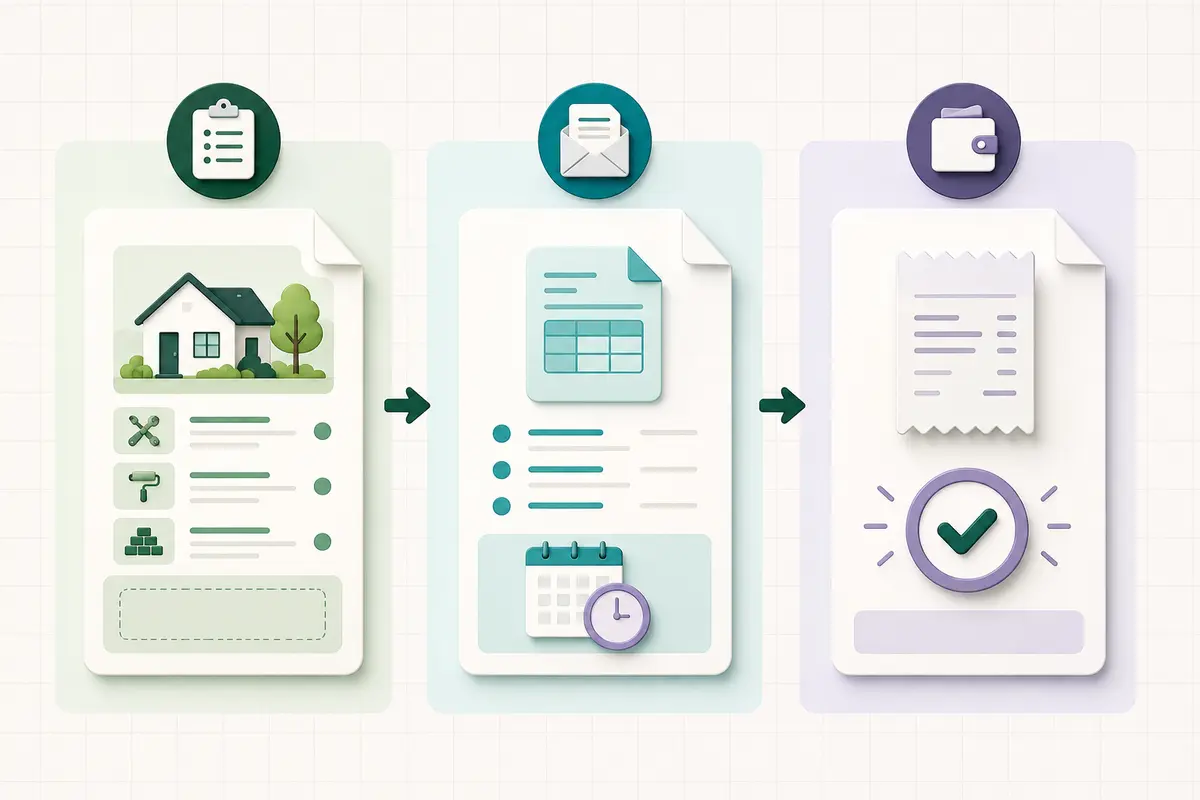
Imagine a home-maintenance company receives a request to paint two rooms.
First, the company inspects the project and sends a quote describing preparation, paint, labor, exclusions, price, and how long the offer remains valid. The customer accepts the scope and price.
Next, the company completes the work. According to the agreement, payment is due after completion, so the company issues an invoice. The invoice references the accepted quote, lists the completed service, and gives the due date and payment instructions.
Finally, the customer pays by the agreed method. After verifying the payment, the company creates a receipt that records the amount, date, method, and related invoice. Each document tells a different part of the same story.
If the customer had paid a deposit before work began, the company might issue a deposit invoice and then a receipt after receiving the deposit. The final invoice could account for the deposit and show the remaining balance. The exact documentation should follow the contract and applicable requirements.
Which document should you send?
Ask these questions in order:
- Has the customer approved the scope and price? If not, a quote or estimate is usually the relevant document.
- Is payment now due? If yes, prepare an invoice that reflects the agreement.
- Has payment actually been confirmed? If yes, a receipt may be appropriate.
- Is the payment partial? Clearly identify the amount received and any remaining balance.
- Does the customer or jurisdiction require a specific form? Follow those instructions rather than relying on a generic workflow.
This decision sequence is more dependable than choosing a document based only on which template looks familiar.
Common document mistakes
Sending an invoice when the customer expects a quote
An invoice can imply that payment is already due. If scope and price are still under discussion, send a proposal or quote instead.
Treating a quote as proof of payment
A quote records a proposal, not payment. Keep payment evidence and issue an appropriate receipt where needed.
Issuing a receipt before confirming funds
Do not mark a transaction paid because a customer says payment was sent. Confirm it using the appropriate business process.
Changing terms between documents
The invoice should not silently increase the accepted price or introduce different terms. Document and approve legitimate changes before billing.
Failing to cross-reference documents
References such as quote, purchase-order, invoice, or project numbers make it easier to connect records. Use consistent identifiers without exposing unnecessary private information.
Using one document for every purpose
A single file labeled “invoice/receipt” can be ambiguous. Separate the payment request from the payment confirmation unless your transaction system and applicable rules clearly support a combined record.
Record-keeping considerations
Store the issued version of every document, not only an editable draft. Use clear filenames and preserve relevant acceptance and payment evidence. Keep corrections traceable rather than replacing an issued document silently.
Retention periods and tax-record rules vary. Check official guidance for the jurisdictions in which you operate and obtain professional advice when your situation is complex.
Frequently asked questions
Can a quote become an invoice?
The information can be reused after acceptance, but the invoice is a new document with a different purpose. Confirm final quantities, dates, price adjustments, taxes, and payment terms rather than simply renaming the quote file.
Is an invoice the same as a bill?
The words are often used similarly, but usage depends on context. A seller may call the document an invoice while the customer calls it a bill. Specific legal or industry meanings can vary.
Is a paid invoice the same as a receipt?
A paid invoice marked with verified payment information may serve a similar practical purpose in some contexts, but a separate receipt can provide clearer evidence. Follow customer expectations and applicable requirements.
Should a receipt show the payment method?
It is commonly useful to identify the method without exposing sensitive account details. Record only information appropriate for the transaction and your retention practices.
What happens if the final price differs from the quote?
Document why it changed and obtain any required approval before invoicing. Do not surprise the customer with unapproved charges. The contract and local rules may determine how changes must be handled.
Final takeaway
Choose the document by transaction stage. Use a quote to propose, an invoice to request payment, and a receipt to record payment. Keep each document accurate, connected to the underlying transaction, and stored with supporting records.
Related articles
- Best Free Invoice Generator for Small Businesses
- How to Create a Professional Invoice in Minutes
- What Should an Invoice Include? A Practical Checklist
Sources to verify before publication
- Official document, tax, and record-retention rules for the target jurisdiction
- Industry-specific definitions of quotes, estimates, invoices, and receipts
- Final public behavior of all three FreeGenDoc generators
This article provides general information and is not legal, tax, financial, or accounting advice.
Ready to try it yourself?
Open the tool